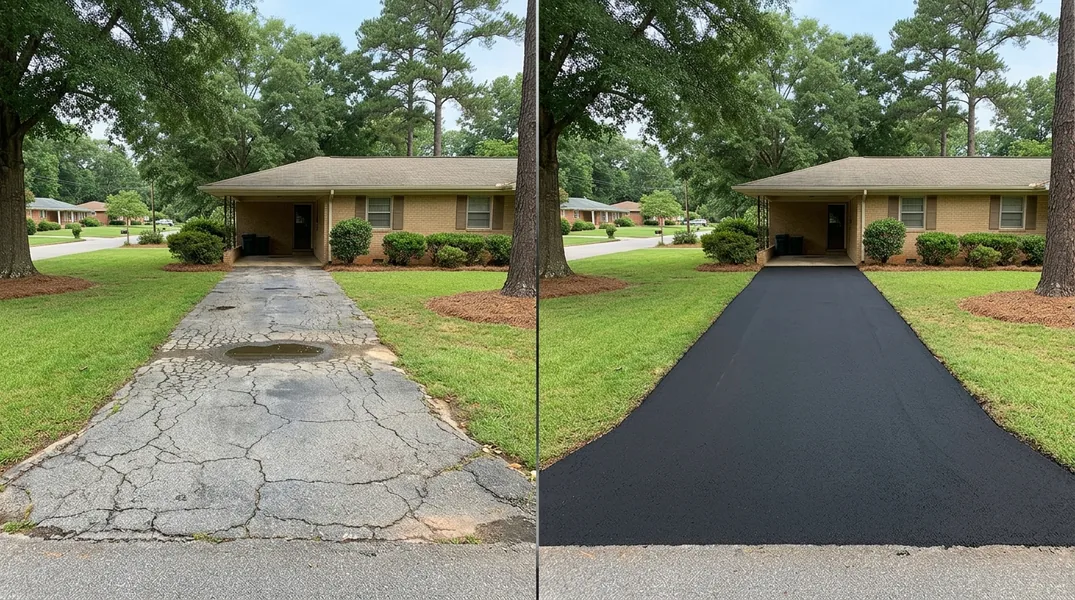
Asphalt vs Concrete Driveways: Understanding the Greenville Climate Challenge
When it comes to choosing between an asphalt vs concrete driveway in Greenville, homeowners face a decision that goes beyond simple aesthetics. The climate and soil conditions in the Upstate of South Carolina create unique challenges that can dramatically affect how your driveway performs over time. Asphalt Driveway Paving & Installation has become a popular choice for local residents, but understanding how it compares to concrete is essential before making your investment.
The red clay soil common throughout Greenville and the intense summer heat create conditions that test both materials differently. Concrete offers a certain permanence and requires less frequent maintenance, while asphalt provides flexibility and cost advantages. Your choice ultimately depends on your budget, maintenance preferences, and how long you plan to stay in your home.
How Red Clay Soil Affects Asphalt and Concrete Driveways
Red clay soil presents a significant challenge for any driveway material because of its expansive nature and poor drainage characteristics. When clay becomes saturated during heavy rains or spring thaw, it swells. When it dries out during summer, it shrinks and can create voids beneath your driveway. This constant movement is particularly problematic for concrete, which is rigid and cannot flex with soil movement. Over time, concrete driveways in clay-heavy areas develop cracks, heaving, and uneven settling that can become safety hazards and eyesores.
Asphalt, by contrast, has inherent flexibility that allows it to move slightly with the soil beneath it. This flexibility helps asphalt driveways resist the cracking and breaking that plagues concrete in clay-heavy regions. However, this doesn't mean asphalt is immune to clay soil issues. A properly prepared base layer is crucial. Professional installation with adequate drainage and a solid foundation is what separates a long-lasting asphalt driveway from one that fails prematurely. This is why working with experienced local contractors who understand Greenville's soil conditions matters so much.
Summer Heat and UV Exposure: Which Material Holds Up Better
Greenville summers are hot and humid, with temperatures regularly climbing into the upper 80s and 90s. This intense heat affects both asphalt and concrete, but in different ways. Asphalt absorbs heat and can become quite soft during peak afternoon temperatures. You may notice slight surface deformation if you park your car in the same spot for extended periods during summer, though this typically resolves as temperatures cool. The dark color of asphalt also means it will feel noticeably hot to walk on barefoot during summer months.
Concrete, while not absorbing heat the same way, is vulnerable to UV degradation and thermal stress. The surface can fade, and repeated expansion and contraction from daily temperature swings can accelerate cracking. Concrete also becomes slippery when wet and can develop algae or mold in shaded areas due to humidity. To protect either surface from summer damage, proper sealing is essential. An asphalt driveway benefits from seal coating every two to three years, while concrete should be sealed periodically to resist UV and moisture penetration.
Asphalt Driveway Lifespan vs Concrete: What to Expect in Greenville
The asphalt driveway lifespan in Greenville typically ranges from 15 to 20 years with proper maintenance, though some well-maintained driveways last longer. Concrete driveways can last 25 to 30 years or more, which makes them appear to be the better long-term investment. However, this comparison is misleading if the concrete is cracking and breaking due to clay soil movement. A concrete driveway that requires expensive repairs at year 15 is not delivering the value you expected.
Asphalt requires more frequent maintenance but at lower costs per service. Regular seal coating, crack filling, and Pothole Repair & Asphalt Patching keep your blacktop driveway in good condition and can extend its life significantly. Many homeowners find that the combination of lower initial installation costs and manageable maintenance expenses makes asphalt the more economical choice over a 20 to 25 year period. Additionally, if you decide to refresh your driveway, Asphalt Resurfacing & Overlay is a cost-effective way to extend the life of your existing asphalt base without starting from scratch.
Asphalt Over Concrete Driveway: Is This a Smart Solution?
Some homeowners in Greenville consider placing asphalt over an existing concrete driveway as a cost-saving measure. This approach, called asphalt over concrete driveway installation, can work in certain situations but comes with important caveats. If your concrete is in relatively good condition with only minor cracks, an asphalt overlay can provide an updated surface and improved traction. The process is faster and less disruptive than removing and replacing the entire driveway.
However, asphalt over concrete is not always the best long-term solution. If the concrete beneath is actively cracking, heaving, or shifting due to clay soil movement, those problems will eventually transfer through the asphalt layer. Reflective cracking can appear in the asphalt overlay within a few years, defeating the purpose of the upgrade. The best approach is to have a professional assess your existing concrete's condition before deciding on an overlay. If the foundation is sound, asphalt overlay can be an excellent option. If not, Driveway Repair or complete replacement may be necessary for lasting results.
Cost Comparison: Asphalt vs Concrete in Greenville
When comparing pricing for asphalt vs concrete driveways, asphalt typically costs significantly less upfront. A new blacktop driveway installation generally runs 30 to 50 percent less than concrete, depending on site conditions, size, and local market rates. For homeowners on a budget, this initial savings is substantial. However, the true cost picture includes maintenance over the driveway's lifetime.
Concrete requires less frequent maintenance but more expensive repairs when damage occurs. Asphalt requires regular seal coating, crack sealing, and occasional patching, which adds up over time but keeps costs distributed rather than concentrated. When you factor in the cost of replacing a failed concrete driveway versus refreshing or overlaying an asphalt one, asphalt often proves to be the more economical choice for Greenville homeowners. To understand the true cost of your project and get a clear picture of long-term expenses, contact Greenville Asphalt Paving for a free estimate tailored to your specific driveway needs.
Making Your Decision: Which Driveway Is Right for Your Greenville Home
Choosing between asphalt and concrete ultimately depends on your priorities. If you value low upfront costs, flexibility in a clay-heavy environment, and manageable maintenance, a blacktop driveway is an excellent choice. If you prefer minimal maintenance and don't mind the higher initial investment, concrete may appeal to you, provided the site conditions support it and you're willing to address cracking issues if they arise.
The best decision is an informed one based on your specific property, soil conditions, and long-term plans. Greenville Asphalt Paving understands the unique challenges of the local climate and soil, and our team can help you evaluate both options for your situation. Whether you're leaning toward Asphalt Driveway Paving & Installation or want expert advice on asphalt vs concrete, we're here to help. Call us at (864) 385-2398 or request a free estimate today to discuss your driveway project with a local professional who knows Greenville's conditions inside and out.
Looking for a professional asphalt paving contractor in Greenville? Greenville Asphalt Paving responds fast for all your asphalt paving needs.
Get a Free Quote