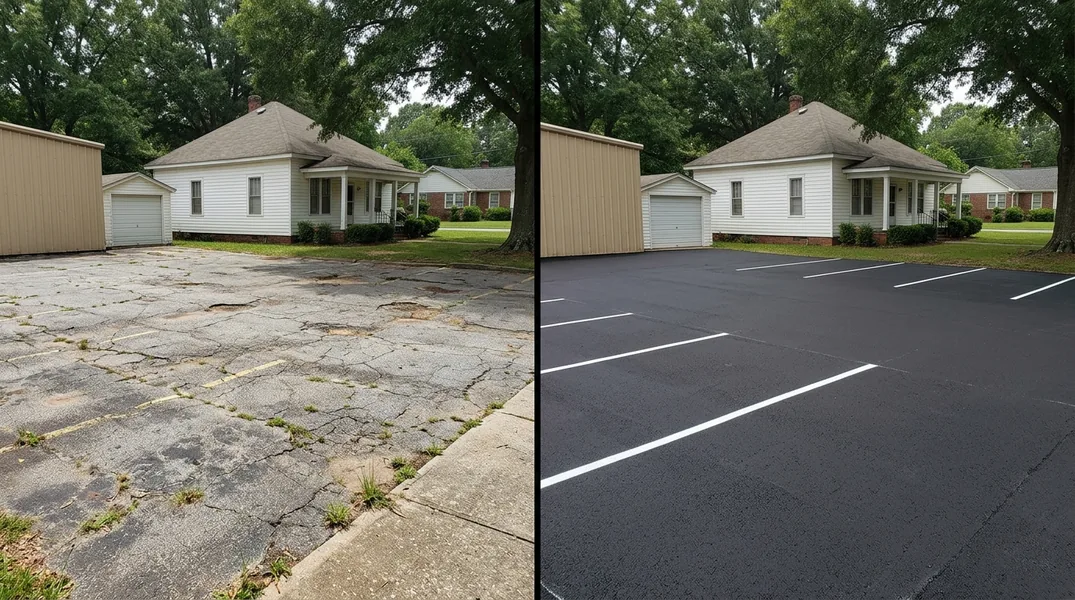
What Is Alligator Cracking and Why Does It Happen?
Alligator cracking is one of the most common and concerning signs of asphalt deterioration. Named for its resemblance to the pattern of an alligator's skin, this type of cracking appears as interconnected, web-like fissures that spread across the surface of your driveway. Unlike simple surface cracks that might appear in isolation, alligator cracking indicates structural failure within the asphalt layers themselves.
In Greenville, where we experience significant temperature fluctuations and seasonal moisture changes, alligator cracking develops for several reasons. Repeated freeze-thaw cycles cause the base layers beneath your asphalt to shift and settle unevenly. Heavy traffic, combined with aging asphalt that has lost its flexibility, creates stress points that eventually fracture. Additionally, water infiltration through small cracks weakens the subgrade, accelerating the deterioration process. Once alligator cracking appears, it's a clear sign that your driveway has reached an advanced stage of wear and requires immediate professional attention.
Understanding Asphalt Overlay vs. Replacement: Key Differences
Asphalt Resurfacing & Overlay and full replacement represent two distinct approaches to addressing alligator cracking, and each has specific applications depending on the extent of damage and underlying conditions. An overlay, sometimes called resurfacing, involves applying a new layer of asphalt directly over the existing damaged surface. This approach is faster, less invasive, and generally less expensive than a complete removal and replacement. However, it only works when the base layers remain structurally sound and can support the additional weight of new material.
A full replacement, by contrast, removes the entire asphalt structure down to the subgrade, allowing contractors to inspect and repair any underlying issues before installing new layers. This comprehensive approach addresses problems that overlays cannot fix, such as severe base layer deterioration, inadequate drainage, or unstable subgrade conditions. While more labor-intensive and costly upfront, a full replacement often provides a longer-lasting solution and can extend your driveway's lifespan by 15 to 20 years or more. The choice between these two methods depends on several factors, including the severity of the alligator cracking, the age of your driveway, and the condition of the layers beneath the surface.
When an Overlay Makes Sense for Alligator Cracking
An overlay can be an effective and economical solution for alligator cracking in specific situations. If your driveway is relatively young (under 15 years old) and the alligator cracking is limited to the top 1 to 2 inches of asphalt, an overlay may restore functionality and appearance without the expense and disruption of full removal. The overlay process involves cleaning the existing surface, filling any large cracks or potholes, and then applying a new asphalt layer that bonds to the old surface. This creates a fresh, smooth driving surface that can extend your driveway's life by an additional 7 to 10 years.
Overlays also work well when budget constraints are a primary concern or when you need a quick solution to prevent further water infiltration. For homeowners in Greenville looking to maintain their property without major disruption, an overlay offers a practical middle ground. However, it's important to understand that an overlay is essentially a temporary fix. It does not address underlying base layer problems, and if the foundation beneath the asphalt is compromised, the new layer will eventually develop the same cracking patterns. Before choosing an overlay, a professional inspection is essential to confirm that the base layers are still stable and capable of supporting additional weight.
When Full Replacement Is Necessary
Full replacement becomes necessary when alligator cracking is extensive, covers more than 25 to 30 percent of the driveway surface, or when the underlying base layers have failed. If your driveway has been in place for 20 years or longer, or if previous repairs have not held up, the structural integrity of the entire system is likely compromised. In these cases, attempting an overlay would only mask the problem temporarily. Water will continue to penetrate through the cracks, weakening the base and subgrade, and you'll find yourself facing another costly repair within just a few years.
A full Asphalt Driveway Paving & Installation replacement allows contractors to remove the old asphalt completely, assess the subgrade and base layers, correct any drainage issues, and rebuild the driveway from the ground up. This comprehensive approach ensures that your new driveway is built on a solid, properly prepared foundation. While the upfront investment is higher, the long-term value is significant. A properly installed replacement driveway can last 20 to 25 years with regular maintenance, making it a worthwhile investment for homeowners committed to preserving their property's value and safety.
Asphalt Driveway Paving & Installation Cost in Greenville: What to Budget
Understanding the financial implications of your repair decision is crucial for homeowners planning their budget. The pricing for an asphalt overlay typically ranges from $1.50 to $3.00 per square foot, depending on the extent of surface preparation required and the thickness of the new layer being applied. For a typical 2,000 square foot driveway, you might expect to spend between $3,000 and $6,000 for a quality overlay. This lower cost is one of the primary reasons homeowners consider overlays as an initial solution to alligator cracking.
Full replacement, however, involves significantly higher costs, generally ranging from $3.00 to $5.00 per square foot or more, depending on site conditions and the depth of base layer work required. That same 2,000 square foot driveway could cost $6,000 to $10,000 or more for complete replacement. While this represents a substantial investment, it's important to view it in the context of long-term value. A replacement driveway eliminates the risk of recurring problems and provides years of reliable service. The key is to get a thorough inspection and professional assessment from a qualified contractor who can give you accurate guidance on which approach will best serve your property in the long run. Contact Greenville Asphalt Paving at (864) 385-2398 to discuss your specific situation and receive a detailed cost estimate.
How to Decide: Questions to Ask Your Contractor
Making the right choice between overlay and replacement requires detailed information about your driveway's current condition. When you consult with a professional contractor, ask them to perform a core sample or visual inspection to assess the thickness and condition of the base layers. Request a detailed explanation of what's causing the alligator cracking and whether those causes can be addressed with an overlay or require full removal. Understanding the root cause is essential for predicting how long your repair will last and whether you're investing in a temporary solution or a permanent fix.
Also ask your contractor about the expected lifespan of each option, warranty coverage, and what maintenance will be required going forward. A reputable company will be transparent about the limitations of an overlay and honest about when full replacement is the better choice, even if it means a larger initial investment. Get multiple quotes from experienced contractors in Greenville, and don't base your decision solely on price. The cheapest option today might become the most expensive if it fails to address the underlying problem. When you're ready to get professional guidance, reach out to Greenville Asphalt Paving for a free estimate and expert advice tailored to your driveway's specific needs.
Looking for a professional asphalt paving contractor in Greenville? Greenville Asphalt Paving responds fast for all your asphalt paving needs.
Get a Free Quote